Tuesday, 14 February 2023

I Am: The Light of the World (John 8:12-30)


The main point: Jesus makes another statement that declares his identification with his Father, and   expands upon it by claiming to be the light of the world. His listeners cannot understand why Jesus applies this well-used biblical metaphor to   himself, however, because they, according to Jesus, do not truly know the Father. They continue to misunderstand Jesus. But do we understand him any   better?


John 7-8 takes place in Jerusalem, as Jesus teaches at   the Temple during the Feast of Tabernacles. The entire discourse, as indeed   much of the book of John, centres around Jesus revealing who he is and who   his Father is, giving glory to the Father, and being rejected by most of   those around him. Chapter 7 begins with Jesus secretly attending the   festival, and chapter 8 ends with Jesus slipping away in secret, which tells   us that that when he is teaching he is revealing something that is otherwise   hidden, and also shows us just how dangerous this teaching and revelation   truly is.


In John   8:12-30 Jesus is speaking to “the people”. This is not a homogenous   group. We know in this group there are Pharisees who challenge him, Judeans   who want to seize and kill him, and others who put their faith in him, at   least for a short while. But they were all in Jerusalem at the time of the   religious feast, so we can assume that the crowd was primarily, possibly even   exclusively, Jewish, or at least connected to the Jewish faith.


When Jesus makes his “I Am” statement (which he   repeats more than once in this passage), we have already seen that he   intentionally identifies himself with the God of Abraham, Isaac, Jacob, Moses   and the Prophets (when Moses asked God for his name, his response essentially   was “I AM who I AM” – Exodus 3:14).   This is scandalous enough, but becomes even more so when Jesus adds that he   is the Light of the World. Only God, (or possibly the Torah) could ever truly   make that claim.


There are many images that might come to us through   the phrase “light of the world”. Without light we would have no heat, no   ability to see, no energy, no direction, no comfort.  Light has also come to mean knowledge and   discovery, being illuminated by ideas. One of the primal fears of humanity is   to be left without light, plunged into utter darkness. We would be left in a   cold, dark, comfortless place with no hope, no future, no thought.


These are some of the things we think about when we   hear “light” and darkness”. But there are many uses of light and darkness   throughout Scripture that would probably have been echoing through the minds   of the Jewish audience as well. Light is the first thing that God calls into   being with his Word at the beginning of all things. Isaiah 9:2 talks about “the people walking in darkness” who have   “seen a great light.” Isaiah 42:6 and 49:6 both describe how the Servant   of the Lord will be a “light to the Gentiles”. John himself in his first   chapter spoke of the light coming into the darkness of the world, and the   darkness failing to understand it.


It should also be noted that Jesus made this claim   at the Temple. Jesus was teaching near the treasury, next to the Court of   Women, which is where a special ceremony would take place during the Feast of   Tabernacles. This ceremony was designed to remember how God led his people   out of Egypt as a pillar of flame by night. The golden lamp stands would be   lit, and all the pilgrims would bring torch lights to the ceremony. The court   would therefore be powerfully illuminated, referencing a messianic prophecy   from Zechariah 14:7: “It will be a   unique day, without daytime or nighttime – a day known to the LORD. When   evening comes, there will be light.” Jesus announces that he is, in fact, the   light of the world, the presence of the divine / pillar of fire that has come   to lead his people out of the captivity of darkness, death and sin. And here,   in Jerusalem, at the Temple, during the Feast of Tabernacles, the light of   the world is rejected by the darkness of the world.


Why was he rejected? It seems that the audience did   not really understand what he was claiming about himself. It was surely too   much for him to claim to be “I Am”, to claim to be the light of the world.   What did he mean? Where was he going, and where was he from? Who was his   Father that he keeps talking about? Jesus continues to clarify, but   throughout the gospel of John the more he clarifies, the angrier the audience   becomes. Jesus explains that they cannot understand who he is, even though he   is the Word that has been telling them these things “from the beginning”, because   they truly do not know his Father above, from whom he has come.


To know the Father was not just to have information   about Him, but to be in spiritual fellowship with Him. Jesus was revealing   who His Father really was, and opening up the possibility of intimate and   everlasting fellowship with the Father, but the people could not understand   this light. It will become even clearer in the next section how they thought   they knew the Father of Jesus, but they truly did not. Only the Father could   draw people to Jesus, and their hearts would not be drawn. Because their   hearts would not be drawn, they could not come to know the Father through Jesus,   his Son. This should cause us to ask of ourselves: are our hearts being drawn   to Jesus by the Father? Will we be drawn, will we respond? Will we know the   Father through the Son? Will we be in right spiritual fellowship with God?


Because if we are not in right spiritual fellowship   with God, if we do not know the Father through the Son, then we will die in   our sins. This is destruction, the final, everlasting death, the eternal   absence of the light of life, the forever darkness. The Father has made the   light of life available to us through his Son, who is the light of the world.   Will we receive this light, or will we be the darkness that does not   understand, that does not know, that rejects?


Jesus prophecies that he will be lifted up – by which he means on a cross – and that this is when his full glory, and the true revelation of his Father’s glory, will be shown. This is when people will “know” him, will “know” why and from whom he has been sent, when he has completed his life of obedience to his Father’s will. Jesus knows that his Father is always with him, because he obeys him completely and lives only to please him. Some of us may come from family backgrounds that were harmful, in which we desperately tried to please our parents but never could. Jesus does please his Father, and his Father abides with him always. He also makes it possible for us to know that God always abides with us, as we follow the commands of Jesus.

Saturday, 4 February 2023

Knowing the Face of the Father (Deut 5:1-6)


For some people, knowledge of God is primarily rooted in what they read and the doctrines they believe in. For others, knowledge of God is primarily rooted in how they feel about God personally, and what they have experienced in their lives. But a true and deep knowledge of God, it would seem, requires both knowledge and experience.


For ancient Israel knowledge about God and experience of God went hand in hand. They did not separate their doctrine from their experiences. What they knew about God was grounded both in historical realities and in the teachings and stories passed on to them from trustworthy sources. True knowledge of the Father came from receiving God’s grace and love not just in words, theories and myths, but in action.


God’s revelation of Himself to Israel at Mount Sinai is maybe the ultimate example of this. It was the Father’s will that His children should know Him. Not just know about Him, but have personal knowledge of Him. And so God acted for Israel in a unique way, liberating them from slavery in Egypt, leading them out into the wilderness, and making a Covenant with them. God invited this people into relationship with Himself, a relationship that would be a blessing to them and to the whole world through them. And at Sinai he announced what that relationship would look like, through the giving of the Law.


God expressed this Covenantal relationship to Israel at Mount Sinai by speaking to them through thunder, trumpet, earthquake, smoke, fire and voice. These methods of God’s revelation show his majesty and power, but it is the content of the revelation that shows God’s identity. God reminded Israel of what He had done for them, how He had graciously and powerfully delivered them from political, economic, social and spiritual slavery. That was who He was. This is what they were to remember and know about God.


Mount Sinai was Israel’s great face to face meeting with God. But we know from Exodus 34:20 that no one can see the face of God and live, so how could the people of Israel have met God face to face? To say you knew someone’s face was the same as saying you knew their presence. At Mount Sinai Israel was in the presence of God, in the presence of his power, his grace, his love, his faithfulness, in a totally unique and personal way. God is “present” everywhere, but God was specifically, powerfully and obviously “present” at Mount Sinai in front of his people, and in the Exodus. So God’s people could recognise and know his presence, his face, through his loving actions towards them. But God’s face was too much for them. They were terrified of the fire, and pleaded for Moses to intercede and mediate for them.


God’s power, grace, love and faithfulness were also on display through the cross. This is another time when God distinctly and uniquely showed his face to his people and to the world. And just like at Mount Sinai and in the Exodus, to know the face of God through the cross is to know God as the Saviour who pours out grace on a people who have not earned it, but whom the Father loves nonetheless.


But we were not there to experience the Exodus, or God speaking through the fire at Mount Sinai, or Jesus dying on the cross, or the Holy Spirit falling at Pentecost. So if our knowledge of the Father’s face is to be grounded in these historical realities, how are we to truly know His face? The people of Israel were instructed to re-read and re-tell the story of the Exodus and the Covenant and the giving of the Law, so that future generations would know the story together and reaffirm God’s presence amongst them. They were also instructed to re-enact the story of God’s deliverance through worship and through feasts like the Passover. Likewise, Christians re-read and re-tell the stories of God to one another, and re-enact the loving actions of Jesus through worship and when we gather to remember his broken body and spilled blood. These things help ground our knowledge of God in the ongoing story of the Father and his people, so that we don’t just create whatever God we feel most comfortable with. And we also have been filled with the exact same Spirit that filled the first believers at Pentecost, so that we, like them, can cry out to our Abba Father.


(Much of the information used in this and the following cell outlines is taken from Knowing God the Father Through the Old Testament by Christopher Wright, From Paradise to the Promised Land by T Desmond Alexander, and A Survey of the Old Testament by Hill and Walton.)

Wednesday, 1 February 2023

January Movies and Television

Here are the movies and the television series I watched in January, separated into decades.

Movies


1970’s

Rankin/Bass’ The Hobbit (1977): The original animated version of The Hobbit, covering most of the tale in just under two hours, and better in almost every respect than the live action Hobbit trilogy. Yes, the animation and voice over work and songs are a little dated, but they still capture the wonder and whimsy of the story with great effect. Every major event - barring Beorn’s house and the Arkenstone - is covered, and, most importantly, no significant extra-canonical nonsense is added. There is no filler here. The story-telling is sparse and precise, but not overly rushed. There are many songs, as in the book, and they are artfully used to advance the narrative. The depiction of the Wood Elves seems a little strange, but then we have become accustomed to Orlando Bloom as Legolas, and who are we to say that they weren’t in fact greenish and bandy-legged? And, gloriously, Smaug retains his threat and menace, (unlike in the trilogy where he is stupidly bested in a scene reminiscent of a theme park ride by a handful of hapless dwarves.) A far better introduction to the Lord of the Rings movies than anything else. 

2000’s

The Fellowship of the Ring (2001):

The Two Towers (2002):

The Return of the King (2003): I watched these three, extended editions, back to back to back again with about 300 other people at the Rio theatre. It was like a religious experience, and I’m not exaggerating. There were cheers and gasps and tears throughout. In a very non-religious cinema, in an extremely non-religious neighbourhood in a thoroughly secular city, a host of people were completely engaged with JRR Tolkien’s Christ-infused story. They were entranced by this Catholic writer’s words about love, death, beauty, goodness, hope, pity, and eternity. Just as faith was kept alive in the Soviet Union through the works of Tolstoy and Dostoevsky, it may be that faith is inspired in a faithless West through Tolkien and his ilk. (Jan)


2020’s

The Menu (2022): A very dark comedy, which at heart is a bitterly satirical take-down of the idolisation of food culture and celebrity chefs. It is essentially answering the question: What if Ratatouille was a movie about psychopaths instead of rats? A small group of entitled, insufferable people board a boat and go to Hawthorne Island, where they have paid an exorbitant amount for a tasting experience with Chef, played insanely by Ralph Fiennes. Chef’s staff are devoted to him and his methods - in ways that grow increasingly disturbing throughout the movie. The pretentiousness of chef and foodie culture is on full display in this movie, as is an underlying message that maybe, just maybe, food is for eating and not just experiencing. The third act descends into full dark comic absurdity. It is not realistic, but it is not meant to be. (Jan)

Guillermo del Toro’s Pinocchio (2022): Another take on the old tale, with many of the classic del Toro tropes thrown in. It is certainly a more mature version, one which does not skirt at faith (there are some clear Christ parallels happening with Pinocchio in this version, and even some biblically-accurate angel-type creatures), war (it takes place during the First and then Second World War, and Mussolini makes an appearance), and death. The main focus is the father-child relationship, the good and the bad of it, and this is quite well done. It is funny, whimsical, and terrifically sad. It is also gorgeously animated and voiced, especially Pinocchio’s singing by Gregory Mann, and David Bradley is wonderful as Geppetto. (Jan)

The French Dispatch (2021): An extraordinarily Wes Anderson-esque Wes Anderson movie. It is the story of The French Dispatch, a (fictional) largely unread Sunday supplement to the Liberty Kansas Evening Sun, a magazine created by a host of bizarre, ex-pat reporters and a dedicated editor (played by Bill Murray, of course) in Ennui, France. The film takes the shape of three long, unconnected stories in one edition of The French Dispatch, and then one final attempt to write the obituary of the editor, upon whose death the magazine is concluded. It is, of course, quirky, filled with close-ups and camera pans, mixing live action and cartoon, with quick, witty dialogue (“a weakness in cartography, a curse of the homosexual.”) and loads of pretension. All of Anderson’s normal, excellent cast members are back, and some more are added. Anderson, at his best, employs his tropes to tell a coherent narrative. This movie, given its tripartite structure, is not exactly coherent, except in its overall portrayal of the weirdest magazine in the world. Not his best (The Grand Budapest Hotel or Moonrise Kingdom) nor his worst (Isle of Dogs, IMO) but even Anderson at his middling is worth watching, because he is so unlike everyone else. (Jan)

After Yang (2022): A slow, gentle, exquisite meditation on death, memory, and family. Set in the future, a mother and father with an adopted Chinese daughter have purchased a “Technosapien” big brother for her. Yang’s purpose is to help mind his little sister and to connect her to her Chinese culture and heritage. But after several years Yang shuts down, and the family are forced to ask questions about the nature of life and death, particularly as more and more of Yang’s inner life is revealed to them. This is the kind of science fiction film that allows an unhurried exploration of questions that really matter, and is meant not so much to dazzle with future technology as to cause us to wonder at our own existence.


Television

Severance, Season 1: This is an absolutely phenomenal show, built on the premise of severance, a technology that can split a person’s mind so that they exist separately at work and away from work. In other words, your work self - your “Innie” - only gains consciousness on the elevator ride to the basement of Lumon industries, and loses it again on the way up after the work day is over. They have no memory of their personal history; their entire lives are spent inside the office, doing mysterious work which they do not understand. The show is a labyrinth, reflected in the maze-like hallways and offices the characters walk through. We spend most of our time with the four office mates and their three superiors (who are not severed), but we also get some glimpses of their exterior lives, especially that of Mark S, played by Adam Scott. He is confronted by a former work mate, and begins to wonder - both Innie and Outie version - whether Lumon is as good as they project themselves to be. It is acting at its finest, and the exquisite storyline and direction (mainly by Ben Stiller) present the viewer with an existential hell of Kafkaesque/Kubrickian proportions, as we begin to reckon with the implications of the vulnerability of such cut-off people. It is also a vicious critique of the modern job-scape, with some zingers thrown in at corporate-political-medical power and the silliness of the self-help world as well. The first season ends on as tense and finely-tuned cliff-hanger as exists in television, and I cannot wait for season two.


Tuesday, 31 January 2023

January Book List

 Here are the books I read in January, and a brief synopsis and review. 


  • Heart of a Dog, Mikhail Bulgakov: The long-banned piece of speculative fiction by the Russian author Bulgakov. Written in 1925, but suppressed by the Soviet state for its clear anti-Soviet sentiment, this book has only come to light relatively recently. It is similar in some ways to HG Wells’ The Invisible Man, or Shelly’s Frankenstein, in that the central action revolves around science that tests the boundaries of humanity. Two doctors find a stray dog in Moscow and replace its testes and pituitary gland with that of a just-deceased human’s. The eventual result is a dog which becomes a man - a scoundrel of a man, a rude, vicious drunkard, and one who just happens to fall into the philosophy and workings of the nascent Soviet society/Party. In this way, the story is not really about the horrors of scientific experiment on a human, at least not in the same way as Wells’ or Shelly’s stories. But it is about the dangers of the “scientific” attempt to recreate humanity, as Bulgakov believed was happening in Russia. He reserves the greatest ire for Sharikov - the dog-man - and Shvonder, the head of the new housing committee in the doctor’s apartment. Both of these reprehensible characters espouse Party philosophy, the former because it will serve his rapacious appetites, the latter because, presumably, he really believes in it. It is a deeply satirical story, racing with action and fury and a wide variety of mixed narrative perspectives, which was immediately (and somewhat understandably) censored by the State it was critiquing so effectively. There is something in the message of the book for us today as well. Our humanity may not be played with - on a personal or societal scale - without drastic consequences. It is a message we should heed with utmost care.

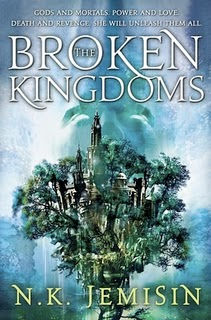
  • The Broken Kingdoms, NK Jemisin: Book two in the Inheritance Trilogy, set in Sky/Shadow, the city of the gods. Jemisin is one of my favourite new fantasy writers, and this book, coming after the first one where we learned of the three gods - Bright Itempas (the Sun), Nahadoth (the Nightlord) and Enefa (the Dawn/Dusk, and newly remade), follows the story of Oree, a blind woman who can only see the magic of the gods, the godlings, and the Scriveners (humans who make use of basic magic). The book is essentially Oree’s journal account of her coming to Shadow, making a living, falling in with some godlings, and getting embroiled in certain plots to kill the gods. The writing is entirely engaging and the world-building excellent. I am always looking for what truth there is in fiction that I may hold with clarity before my heart, and in this there are some important words about loneliness, madness, vengeance, and self-control. 


  • The Kingdom of Gods, NK Jemisin: Book three in the Inheritance Trilogy, this concluding story is told from the perspective of Sieh, oldest of the godlings, the god of childhood, the Trickster. It is a good book, and a good series, dealing with power, loneliness, love, and many other things besides. The world-building is well done, not obsessively detailed in the same way as Tolkien or Martin, but rather paints in more broad strokes a convincing picture of a gods-haunted world where mortals have had to learn to reckon with powers outside of their control. But the world is changing, for mortals, demons, godlings and the Three themselves. The themes of change, growth and power come very much to the fore in this concluding book, and the finale is pretty epic. I had to skip over the many sex scenes, however, and some of the characters - most notably Kahl - do not get fleshed out as well as I might have hoped. 

  • To Life! L’Chaim! Prayers and Blessings for the Jewish Home, Rabbi Michael Shire: Beautiful images and prayers, suitable for many of life’s moments, joys and hardships. I have begun using this book daily to supplement my prayers and to be connected to a living tradition of faith and hope. 

  • Maximum City: Bombay Lost and Found, Suketu Mehta: A comprehensive, journalistic, yet also personal meditation on the vast, dense, complicated, violent, dirty, beautiful, rich, poor, corrupt, hopeful, violent, poetic city of Bombay. Mehta explores the destructive nature of the everlasting gangwars; the corruption of the police and politicians; the bizarre existence of the Bombay dancing girls; the insanity of the Rent Laws; the Bombay “no” and the number of ways you have to get around it; the impotence one feels at the plight of street children; the wide array of competing yet also sustaining religious and spiritual beliefs. All within the framework of his own move back to Bombay and his attempt to raise his family in his beloved home city. It is an insider/outsider view of the city, and it is fascinating. 

  • The Wim Hof Method: Activate Your Full Human Potential, Wim Hof: Wim Hof, aka the Iceman, seems to have stumbled upon some deep truths about human physiology, and he lays them out in this book even while scientists scramble to understand and test his method. At its heart, Wim Hof says we need to take cold showers and breathe in a certain way. Doesn’t seem like rocket science, and he certainly garlands his ideas in a wide variety of pseudo-spiritual language. But he also gets results. His take is that we have coddled ourselves with comfort to the point where our bodies have stopped functioning as they should. The cold - “merciless, but righteous” - kick starts our vascular system back into gear, and the breathing changes our neurology. All I can say is, after practising these methods for a little less than a month - I think they kind of work?

  • Money and Power, Jacques Ellul: Yet another book by Ellul that takes everything you know, or assume you know, throws it in the blender of Scripture and precise, profound discernment of the age, and slams you with the convictions of gospel truth. In this book Ellul uncovers the power of money, money as a spiritual power and principality, with such clarity that you are shocked you didn’t see it quite like that before. Money is not neutral, and riches are not the blessing that we think they are. Christ is Yahweh’s Poor One, and the poor are his reflection on earth. Neither capitalism nor communism (Ellul was writing this in the 1950’s, during the advent of the great world-changing clashes between these two ideologies) have the biblical answer to the dilemma of money and power. 

  • A Life of Jesus, Shusaku Endo: A fascinating book, one that I suspect not everyone will appreciate. It is a powerfully rendered retelling of the life of Jesus, based upon the Gospels, but with the backing of source critical scholarship and the weaving of Endo’s skills and interests as a novelist (and one of my favourite all-time novelists). Endo points out aspects of the familiar story which are factually questionable, but which, he avers, may still be utterly “true”. He attempts to explain some of the psychology of Jesus, the crowds, the Sanhedrin, and especially the disciples. He zeroes in on Jesus’s message being about the love of God and the God of love, and then asks the question that, in his mind, never gets properly asked or answered by those who question the truth of Jesus: How is it that the disciples move from cowards to courageous martyrs? What happened? This is the very question that brought me back to faith in University.

  • Indians on Vacation, Thomas King: I am a big fan of Thomas King and have enjoyed every book of his that I have read. Until, sadly, this one. I’m not sure exactly what the issue is, but it just didn’t work for me. It is the story of Blackbird and Mimi, an older Indigenous couple from Canada, who are in Prague looking for evidence of a lost family bundle that Mimi’s great-uncle took when he joined a travelling rodeo show in the early 20th century. The story, told from the perspective of Bird, a semi-retired photojournalist, also weaves in events from their life in Canada and their other travels to various locations in Europe, but in an uncharacteristically disjointed way. The problem, I think, is that Blackbird is a miserable grump - his various “demons” of depression, self-loathing, etc..are anthropomorphised into characters he can see and interact with. He is someone you might not want to spend any time with, but the narration forces you to spend the entire book seeing things from his dour perspective. This includes his views on Mimi, who is irrepressibly optimistic and adventurous, traits that are viewed as an intolerable bother and nuisance by Blackbird. There are reflections within on the refugee crisis, the sixties scoop, and the general impotence people of good hearts feel upon encountering the pain and sorrow of the world, but mostly it just feels world-weary. Nothing is resolved, the family bundle isn’t found, nobody changes or even seems to learn or grow. There are so many great Thomas King books out there, I’d suggest giving this one a miss and reading any of the other ones. 

  • The Sea and Poison, Shusaku Endo: Set in Japan during the second world war, this is a story about personal responsibility and the effects of conscience. A team of doctors and nurses at a hospital of TB patients is faced with the opportunity to perform vivisections on American prisoners, in the interest of furthering medical science. Endo gives us the backgrounds of several of these characters, each of whom react differently to the horrific procedure. It was, apparently, one of the first times the issue of personal responsibility for actions taken during the war was brought up in Japanese fiction, and the novel won Endo awards and acclaim. It is a stark and stirring work, the clinical nature of the surgery scenes and the interior psychological wrestling of the characters in particular bearing the ring of truth.

  • Genesis, Robert Alter translation and notes: I love Alter’s translation work. It takes familiar books and renders them at once unfamiliar, poetic, and earthy. His explanatory notes are always brilliant, occasionally snarky, sometimes even funny. And this story holds its spiritual, narrative and psychological relevance as much as ever.

Monday, 30 January 2023

The Fifth Sign: Ghost on the Water (John 6:16-21)

The main point: Moving water represented chaos to the people of Israel, and certainly the disciples were caught up in both the chaos of the storm, and the chaos of the people who wanted to force Jesus to be King. In the midst of this chaos, Jesus walks across the water, bringing peace and order, and revealing his identity again as the One who has power over Creation.


After the feeding of the 5000, Jesus left to be alone in the mountains. This would have caused a fair amount of confusion amongst the people who had just witnessed a miracle, and amongst Jesus’ committed followers. His actions seemed like a sign: he fed people bread from heaven, at the time of the Passover, in the wilderness. The people there took it to mean he should be King, and were ready to force this issue. But this was not what the sign was pointing to, as we will see later on in the chapter. So Jesus takes off, leaving his disciples uncertain as to what to do next.


As Jesus does not come back to them, they get in their boat and start making their way back across the sea. So it is that this miracle takes place on the water, still around the time of the Passover, and with only Jesus’ committed disciples as witnesses. The disciples are caught in a storm, and though some of them are experienced fishermen, this still would have been a terrifying event. Jewish people did not typically spend much time in open waters; moving waters, in fact, represented chaos and fear throughout the Old Testament. Their physical environment would have matched their emotional and spiritual environment as well. What did the last miracle truly mean? Is Jesus going to declare himself as the Messiah? Is he going to lead a rebellion? And where has he gone? Jesus’ followers were caught in a chaotic storm in more ways than one.


This is when Jesus is seen walking across the water, terrifying them even more. It would be very easy to see a reflection of God parting the waters at the Exodus in this miracle. Certainly people would be thinking along these lines, given that he had just performed a very Passover-like miracle at the time of the Passover. Jesus could be seen as the new Moses, ready to lead his people again as a Prophet and King, bringing bread from heaven and walking through the water towards their deliverance. Maybe the people had it right?


But Jesus is not simply a new Moses. He is greater than Moses, as will be made very clear later on in the gospel of John. And this is not just Jesus walking through water that God has moved for him; this is Jesus demonstrating his own mastery over the chaotic waters. This is more like Job’s description of God in Job 9:8 as the One who “trampled over the waves of the sea.” This is more like the Psalmist’s account of God commanding and raising the stormy wind, lifting the waves of the sea, making the storm be still and hushing the waves of the sea from Psalm 107:23-32. This is not a sign pointing to Jesus as a prophet like Moses. This is a sign pointing to Jesus as the Divine bringer of Order and Peace. It is the disciples, strangely enough, who fit into the role of Moses here, as they are witnesses to his divine glory ( a few times after miracles in John it is said that the disciples “beheld his glory”).


Jesus’ words speak into this reality as well. His statement: “It is I; do not be afraid”, prepares us for the incredible “I AM” statements to come. The Divine Name (usually translated now as Yahweh) is a declaration of being, of complete and true reality, and it is a name that Jesus takes on for himself. He is the true, the ultimate reality, and he shows this by his power over the chaos of the storm. And, like in most divine appearances, he urges his followers not to be afraid. He has come to bring them peace in the storm. They can trust his presence, though they cannot control it.


We too can trust the presence of Jesus, though we cannot control him. Those who believe in him have been given the Holy Spirit, which is the water of life that flows out of us into the world. We do not know what each storm will bring to us, nor even if we will survive them. But we know that the Lord is always with us, and that his reality is the true and final reality. We can only submit our lives into his care, trusting that he is willing and able to bring peace into our chaos.


Saturday, 21 January 2023

Concepts versus Truth

Endo, in A Life of Jesus, makes clear how the crowd’s concept of Jesus as Messiah - as a nationalistic figure who would overthrow the established order - is in total conflict with Jesus’ main message, which is to speak of the love of God and the God of love. 

At the two main meals at which Jesus presides, the feeding of the 5000 and the Last Supper, messianic fervour ran high. The crowd wanted to manifest its concept of who Jesus, who the Messiah, needed to be. Jesus denies them on both occasions, speaking instead of his death and of his love. 

The concept of a Messiah who would die was simply not within the realm of imagination. And the crowds, ramped up in excitement at these critical moments, are diffused in disappointment at Jesus’ refusal to make use of this momentum. Judas storming out to betray Jesus is not the only one whose hopes are dashed, who will turn from support to anger and accusation.

So goes all the faith in our concepts of the divine, our need to see our image of God, of Jesus, of victory, of political rightness, of social righteousness brought into fruition on the world. We will kill anyone who gets in the way of our vision of goodness.

Tongues n' Stuff (1 Corinthians 14:1-25)

The main point: Love compels us to use the gifts we have been given to build up the Body of Christ and to declare the gospel to unbelievers in ways that they can understand and receive. The mis-use of the gift of tongues was an issue in the Corinthian Church, and Paul explains that while the gift is from God and is good, it is still better to prophesy in the Church gatherings, as prophecy is intelligible and therefore of greater benefit to the Body than tongues (without interpretation) which cannot be understood.


In this chapter Paul carries on his argument from chapter 12. Remember that Paul had been talking about the spiritual gifts in 1 Corinthians 12, specifically how the Church should be understood as one body with many parts, each of those parts being valuable and essential, and all being united by the sharing of the Holy Spirit. In the middle of this argument, Paul stops to deliver his beautiful chapter on love (1 Corinthians 13), the way in which all Christians are to live and use their gifts for one another. With this in mind, Paul returns to his theme of spiritual gifts in 1 Corinthians 14, this time focusing on two specific gifts: tongues and prophecy.


Once again we must be reminded that the gifts were given to be used in the context of Christian worship and gathering. They are designed, according to Paul, to build one another up, not for personal glory or prestige. It seems there was a problem with the use of tongues in the Corinthian Church. Some at least of the Corinthian believers apparently thought that speaking in tongues showed that they had achieved the loftiest possible spiritual status. And so, it seems, many were speaking and praying publicly in tongues during their gatherings for worship and instruction, without any interpretation. Paul’s teaching on tongues and prophecy is directed into this situation.


But we should maybe first deal with this question: what is the gift of tongues? We first read of the apostles speaking in strange tongues at Pentecost when, after receiving the Holy Spirit, the apostles begin speaking the various languages of the people who were gathered in the streets below, languages which the apostles did not previously know how to speak. This is a case of actual human languages being spoken. Is that what was going on in Corinth? Possibly. In chapter 13 Paul talks about speaking in the “tongues of men.” But he also talks about speaking in the “tongues of angels”, and it seems probable that it was more of a supernatural, inspired, non-human utterance that was happening in Corinth. It certainly seems that most people who pray or speak in tongues today are not speaking any known or possible human language, (though there are some reports of that happening.)


At any rate, the tongues that were being spoken, whether human or angelic, were, according to Christensen, “a supernatural manifestation of the Holy Spirit, whereby a believer speaks forth in a language he has never learned, and which he does not understand.” Were they wrong to do this? If tongues were, and are, a supernatural manifestation of the Holy Spirit, then they certainly are not, in and of themselves, wrong. They are a gift from God. They are not gibberish or nonsense, as Paul affirms that it is possible for them to be interpreted. Paul also said that he spoke in tongues more than any of them, and would be happy for them all to speak in tongues. But this does not mean that all Christians have to speak in tongues to be obedient to Scripture. After all, in talking about the diversity of the gifts in chapter 12, Paul asks: “Do all speak with tongues?” The clear implication is, “No, all do not speak with tongues.” So speaking in tongues is good, but not all have to do it, and there are some restrictions on the use of this gift in the context of Christian worship.


The benefits of praying (or singing) in tongues are well-attested. Tongues are given as a private prayer language, the gift of praying or singing with your spirit directly to God, bypassing your intellect, using the words God gives you to communicate with him in deep intimacy. Many people have spoken of the spiritual breakthrough that this produces in personal devotion, when words have run dry but the prayer continues from the heart. This prayer language is inspired by the Holy Spirit, but is not ecstatic, and can be controlled and utilized by the person praying. It is the Holy Spirit of God praying with the spirit of the believer, and it is incredibly encouraging to the believer. In a public setting, spoken or sung tongues that are interpreted through the power of the Holy Spirit, either by the person speaking or by someone else in the congregation, essentially take the form of revelations from God, similar to messages of knowledge or prophecy. In that case, tongues would edify the rest of the Body as well.


Paul compares and contrasts the gift of tongues to the gift of prophecy. Prophecy, like tongues, is an inspired utterance from the Holy Spirit. But unlike tongues, prophecy is intelligible to the speaker and to others. Prophecy is not just telling the future. It is hearing and speaking out a direct revelation from God into the world around you. It is not the same thing as preaching, though preachers may be speaking prophecy, either being immediately inspired with words from the Lord while they are speaking to the congregation, or being directly inspired as they prepare sermons beforehand. And not just preachers will prophesy. Acts 2:17-18 (quoting a prophecy from Joel), says that when the Holy Spirit is poured out, sons and daughters, young and old, even servants will prophesy. (We will look at some of the restrictions on prophecy next week.)


The main point Paul makes about the difference between tongues and prophecy is the fact that prophecy can be understood by all. For that reason, Paul prefers that the believers in Corinth would prophesy, rather than speak in tongues, when they gather together. Prophecy encourages, strengthens, and comforts the congregation (other gifts can do this as well) because it is intelligible, whereas tongues are not. Others cannot even say “Amen” when someone else is praying in tongues, because they don’t know what they are agreeing to. Tongues build up the person speaking; prophecy builds up the whole Church. Paul would rather say five words with his mind at a gathering of the Church than ten thousand in a tongue. So the Corinthians should desire gifts that strengthen the whole Body, rather than ones that primarily benefit themselves.


So what about speaking or singing in tongues in a public gathering? That has certainly become the norm in various Church gatherings, especially in the last 100 years, as it seemingly was the norm in the Church at Corinth. The key seems to be interpretation. Whatever happens in Christian worship should be at least intelligible. This would include a lot of the things we do today in our gatherings that might seem like madness to outsiders. If that is what the Holy Spirit is doing amongst us, then we must obey. But we should also take care to ensure that things are properly interpreted to everyone there.  We will see next week the advice given to Corinth about how to proceed with orderly worship that includes tongues and prophecy. Paul clearly does not think tongues are bad, and assumes that they will be part of Church life. But, for the sake of love of one another, and for the sake of unbelievers who would think Christians were out of their mind if they were all speaking languages that no one understood, Paul restricts their unfettered use in public gatherings. If intelligible prophecy is spoken out in public gatherings, unbelievers who come in may understand it, be convicted, and be saved.


*A quick note on verses 20-22, which cause much confusion. The Corinthians thought they were mature because of their gift of tongues. Paul calls them children, because they wanted to use their spiritual freedom without showing loving concern to the rest of the Body. Some suggest though that Paul is talking about using tongues as an evangelistic tool here, saying that tongues are a “sign for unbelievers.” This is clearly in direct contradiction to the verses that come right afterword, saying that tongues will make unbelievers think Christians are crazy. In these verses Paul is actually referring to Isa 28, in which the tongues of foreigners (Assyrian troops) were used by God to speak a word of judgment to “unbelievers”. The unbelievers in this case were Israel, who hadn’t listened or repented to God. So tongues were a negative sign to these unbelievers, a sign given in a language they could not understand. If anything, Christian tongues speaking could be a sign to unbelievers that they did not have the Holy Spirit, but it would not be a sign that they understood, so it would not have evangelistic value on its own.